CANADA – Jet Fuel Spills into Kamloops Lake After Freight Train Derailment
1. Overview of the Incident
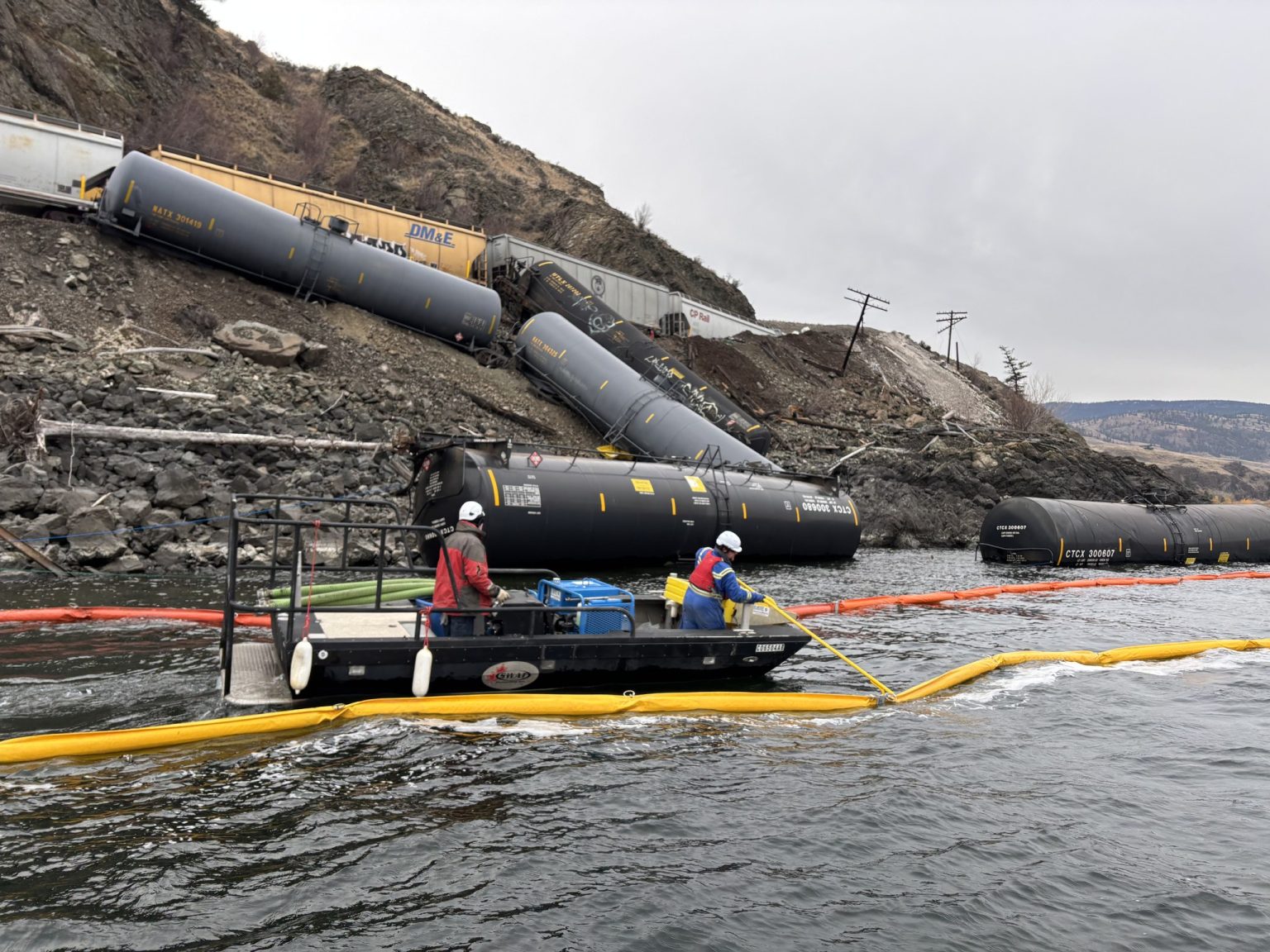
A serious train derailment on November 1 near Kamloops, British Columbia, resulted in a large release of aviation-grade jet fuel along the edge of Kamloops Lake. Approximately 17 rail cars and one locomotive were involved. The Transportation Safety Board of Canada (TSB) is still examining the cause, with early speculation pointing to the possibility of falling rocks, though no official conclusion has been reached.
2. Location and Environmental Significance
The derailment occurred near Cherry Creek, roughly 20 kilometres west of Kamloops, where the railway runs directly beside Kamloops Lake. The lake is a major ecological feature in the region, providing habitat for migratory fish, serving as a wildlife corridor, and supplying drinking water to several nearby communities. These factors heightened the urgency of the response following the spill.
3. Details of the Spill
Updated estimates indicate that 70,536 litres of Jet A-1 fuel entered the environment, slightly below the initial figure of more than 80,000 litres. Additional derailed cars contained gypsum and residual gasoline. The spill reached both the lakeshore and the water itself, creating immediate risks to aquatic species, birds, and shoreline habitats.
4. Emergency Response and Cleanup
Cleanup operations are being led by Canadian Pacific Kansas City (CPKC) with oversight from the B.C. Ministry of Emergency Management and Climate Readiness and other government partners.
- Multiple containment booms were deployed quickly to isolate the fuel sheen.
- A secondary boom perimeter was added to reinforce the containment zone.
- Crews pumped remaining fuel out of the damaged rail cars before removing them; the final car was lifted out of the water on November 9.
- A shoreline cleanup specialist was contracted to assist with recovery efforts using absorbent materials and skimming systems.
Aerial surveillance now shows only minimal fuel—estimated at under 25 litres—within the containment area.
5. Water Quality and Public Health Measures
Protecting community drinking water was a key priority due to the presence of potentially harmful hydrocarbons (e.g., BTEX compounds) in aviation fuel.
- Continuous water sampling has been conducted at nearby community water intakes, including Savona and Tobiano.
- Early test results indicate no exceedances of provincial guidelines for drinking water or aquatic health.
- As a precaution, Interior Health advised the downstream community of Frederick to avoid drawing water from the lake, and CPKC supplied alternate drinking water.
6. Ecological and Long-Term Considerations
Environmental specialists are now assessing potential lasting impacts:
- Subsurface contamination: Investigations are underway to determine whether fuel seeped into shoreline soils, which may require excavation and long-term remediation.
- Wildlife impacts: Necropsies are being performed on several dead birds found near the spill site to confirm whether hydrocarbon exposure was a factor.
- Fuel persistence: Experts are studying how heavier components of the fuel may settle into sediments or remain in the water column over time.
7. Ongoing Monitoring and Next Steps
The site remains an active recovery and monitoring area staffed by CPKC personnel, government agencies, and Indigenous responders. Continued testing and refined estimates of total material lost will inform future restoration work and regulatory follow-up.
Photo credit: Michael Grenier – CityNews. All rights reserved.