

Process Safety Beacon: Emergency response systems save lives!
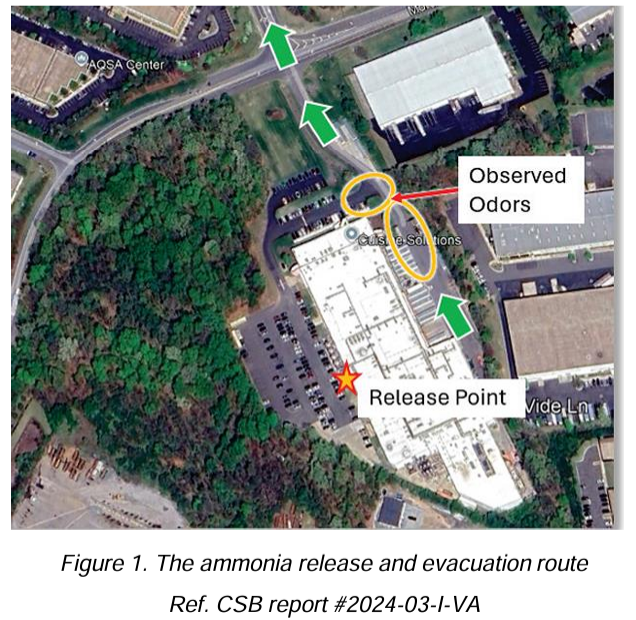
On July 31, 2024, toxic anhydrous ammonia was accidentally released at a food processing facility in Sterling, Virginia. The emergency pressure relief valve discharged approximately 275 pounds (125 Kg) of toxic anhydrous ammonia which formed a cloud. As personnel evacuated from the facility, many inhaled ammonia vapor; four employees were hospitalized.
A refrigeration process upset over-pressurized a surge drum; the drum’s pressure relief valve opened. The ammonia discharged outdoors near to the employee parking lot which exposed evacuees to the ammonia. Within 5 minutes, the production manager called for a site evacuation, but there was no plant-wide alarm system. Workers were told to evacuate verbally.
None of the indoor alarms from the ammonia detection system activated. No one used the emergency shutdown buttons that could have limited the ammonia release. The site’s Emergency Action Plan (EAP) required annual fire drills, but it had no plan for indoor or outdoor ammonia releases.
The sensor in the relief piping to alert workers of an outdoor ammonia release alarmed, but it was not connected to an evacuation alarm. Therefore, workers inside the building were unaware the outdoor release was occurring and some evacuated into the ammonia cloud.
Did you know?
- Workers need to know how emergency shutdown systems function and be trained on how to use them.
- Processes should have an emergency shutdown procedure and operators need to be trained on them. This includes utilities like refrigeration.
- Gas detection alarms need to alert employees of releases and employees need to know whether to shelter in-place or evacuate.
- Some gas detection alarm systems also shutdown processes to reduce the release.
- Critical alarms and notification systems must be effective and well-maintained.
- Relief systems need to discharge to a safe location that will not expose people to dangerous concentrations of hazardous chemicals.
- Emergency Action Plans (EAP) need to address all hazardous scenarios at the location; drills for the scenarios must be documented and performed regularly.
- Emergency responders, both on-site and from the community need to be trained and drilled on the EAP.
What can you do?
- Know how to shutdown the process safely by following the emergency shutdown procedure.
- Actively participate in emergency response drills; someday your life may depend on them.
- Evacuation routes may be different based on the wind direction. Check the wind direction when leaving and know which route and muster station to use.
Emergency procedures must address all major hazards and have drills to practice them.
Download the latest Process Safety Beacon
Source: ©AIChE 2026. All rights reserved.