
GULF OF MEXICO – Record Penalty Levied After Offshore Pipeline Spill
A major crude oil spill in the Gulf of Mexico has prompted unprecedented enforcement action by U.S. regulators. The Pipeline and Hazardous Materials Safety Administration (PHMSA) has proposed a $9.6 million civil penalty against Panther Operating Co., an affiliate of Houston-based Third Coast Infrastructure LLC—the largest fine ever issued in a pipeline safety enforcement case.
The incident, which occurred in late 2023, has drawn national attention as a case illustrating how geohazards, infrastructure vulnerabilities, and operational decision-making failures can combine to produce severe environmental consequences.
Overview of the Spill
The release began on November 15, 2023, along the 18-inch Main Pass Oil Gathering (MPOG) pipeline in Main Pass Block 69, approximately 19 miles southeast of Venice, Louisiana. At around 7:00 p.m. local time, crude oil began discharging into Louisiana state waters classified as an environmentally sensitive area.
Investigators later estimated that roughly 1.1 million gallons of oil were released. Despite early warning signs, the pipeline was not fully shut down until approximately 9:00 a.m. the following morning—nearly 13 hours after initial pressure anomalies were detected. Regulators determined that this delay significantly worsened the spill’s environmental footprint, allowing oil to spread toward vulnerable coastal habitats and wildlife.
Root Causes and Physical Failure
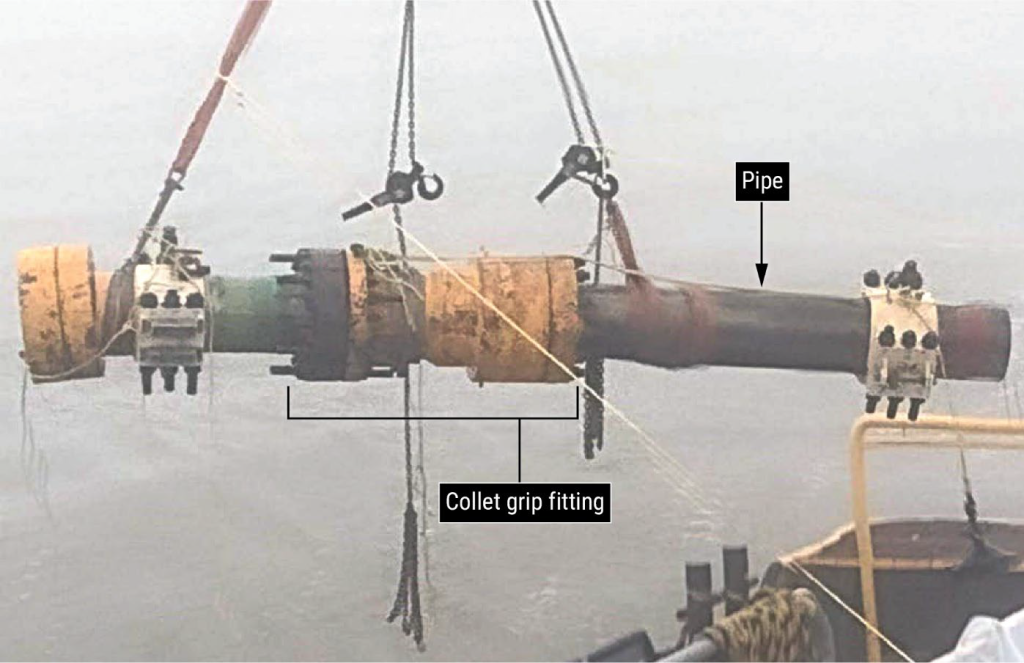
A joint investigation by PHMSA and the National Transportation Safety Board (NTSB) concluded that the spill resulted from a series of interconnected failures rather than a single defect. The immediate mechanical cause was the loss of sealing integrity in a collet grip fitting, which failed after the pipeline experienced abnormal movement.
That movement was attributed to underwater landslides—an established geohazard in the Gulf of Mexico that is often intensified by hurricane activity. Regulators found that Third Coast had not adequately assessed these risks or updated integrity analyses, despite long-standing industry awareness of seabed instability in the region.
Control Room Response and Procedural Weaknesses
Operational failures further compounded the incident. Control room personnel observed pressure irregularities within the first hour of their shift, yet the pipeline continued operating. According to investigators, a supervisor advised against shutting down the line, and staff initially attributed the anomalies to equipment issues rather than a rupture.
The NTSB cited “alarm fatigue” as a contributing factor, noting that repeated alerts were not acted upon with sufficient urgency. This reflected broader shortcomings in emergency preparedness, leak detection protocols, and decision-making authority within control room operations.
Regulatory Violations Identified
PHMSA’s enforcement action outlined several probable violations, including:
- Ineffective leak detection systems that failed to promptly identify a large-volume release
- Maintenance deficiencies, particularly involving valves critical to safe pipeline operation
- Systemic non-compliance with federal safety regulations, affecting approximately 1,900 miles of pipeline operated by the company
Enforcement Action and Compliance Requirements
In addition to the proposed $9.6 million fine, PHMSA issued a draft compliance order requiring corrective measures. Panther Operating Co. would be obligated to evaluate the MPOG pipeline’s exposure to external forces and develop mitigation strategies addressing geological and geotechnical hazards, including unanticipated seabed movement.
The company has 30 days to respond to the proposed enforcement action.
Implications for the Pipeline Industry
While the penalty sets a record for PHMSA, environmental advocates have criticized the amount, noting that it represents less than 3 percent of the company’s estimated annual earnings. Even so, the action is widely viewed as a signal that regulators are adopting a more aggressive stance toward enforcement.
For industry professionals, the message is clear: effective geohazard monitoring must be integrated into integrity management programs, and control room staff must be empowered to prioritize environmental protection over operational continuity. The Third Coast incident underscores that regulatory non-compliance is increasingly unlikely to be treated as a manageable cost of doing business.
Photo credit: Collet grip fitting recovered from the seafloor. (Credit: MPOG). All rights reserved.