
Process Safety Beacon: Loss of Containment (LOC)
All process safety events start with a loss of containment (LOC). Although there are many causes for LOC, the US Chemical Safety Board (CSB) reports have identified the following initiating events for LOC:
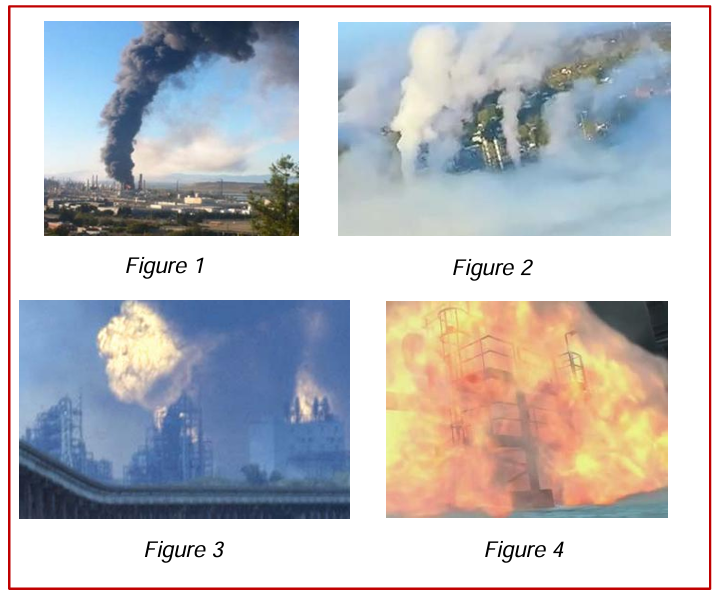
1. Severe corrosion caused a piping failure which released a vapor cloud that ignited resulting in six employee injuries and a shelter–in-place advisory. [Report 2012-03-I-CA] (Figure 1)
2. Pumping material to the wrong tank (incorrect operation) caused a toxic cloud release that injured over 140 people. [Report 2017-01-I-KS] (Figure 2)
3. A strainer valve damaged by a passing vehicle caused a vapor cloud explosion that injured 16 and triggered a community shelter-in-place. [Report 200601-I-TX] (Figure 3)
4. Starting up a heat exchanger bank after cleaning caused a shell rupture which released flammable vapor that then exploded fatally injuring seven workers. [Report 2010-08-I-WA] (Figure 4)
Did you know?
- Process safety events often begin with LOC caused by a variety of initiating events/causes.
- LOC events often occur during turnarounds and extended maintenance, operations when there are many contractors on-site and much of work is non-routine and not documented in procedures.
- LOC events are more frequent during start-up and shutdown activities –especially when a shutdown is unexpected, like those resulting from utility failures.
- Most LOC mechanisms have warning signs; some are obvious like visible rust on equipment/supports or vibration. Others, like corrosion under insulation or the impacts of deferred maintenance or poorly written procedures, can stay hidden for years.
What can you do?
- Look for and report warning signs of LOC mechanisms such as corrosion, physical damage, or inaccurate procedures.
- Be extra vigilant during safe work practice activities such as hot work, line breaking and confined space entry –these permits are critical to ensure LOC do not occur due to non-routine work.
- Always follow procedures, especially for startup and shutdown phases. Bring errors to your supervisor so they are corrected quickly
- Be aware of contractor work in your area, especially when contractor activity is high. Report safety concerns to your supervisor so they are addressed quickly.
Preventing process safety events takes engaged workers and a lot of attention !
Download the latest Process Safety Beacon
Source: ©AIChE 2026. All rights reserved.