

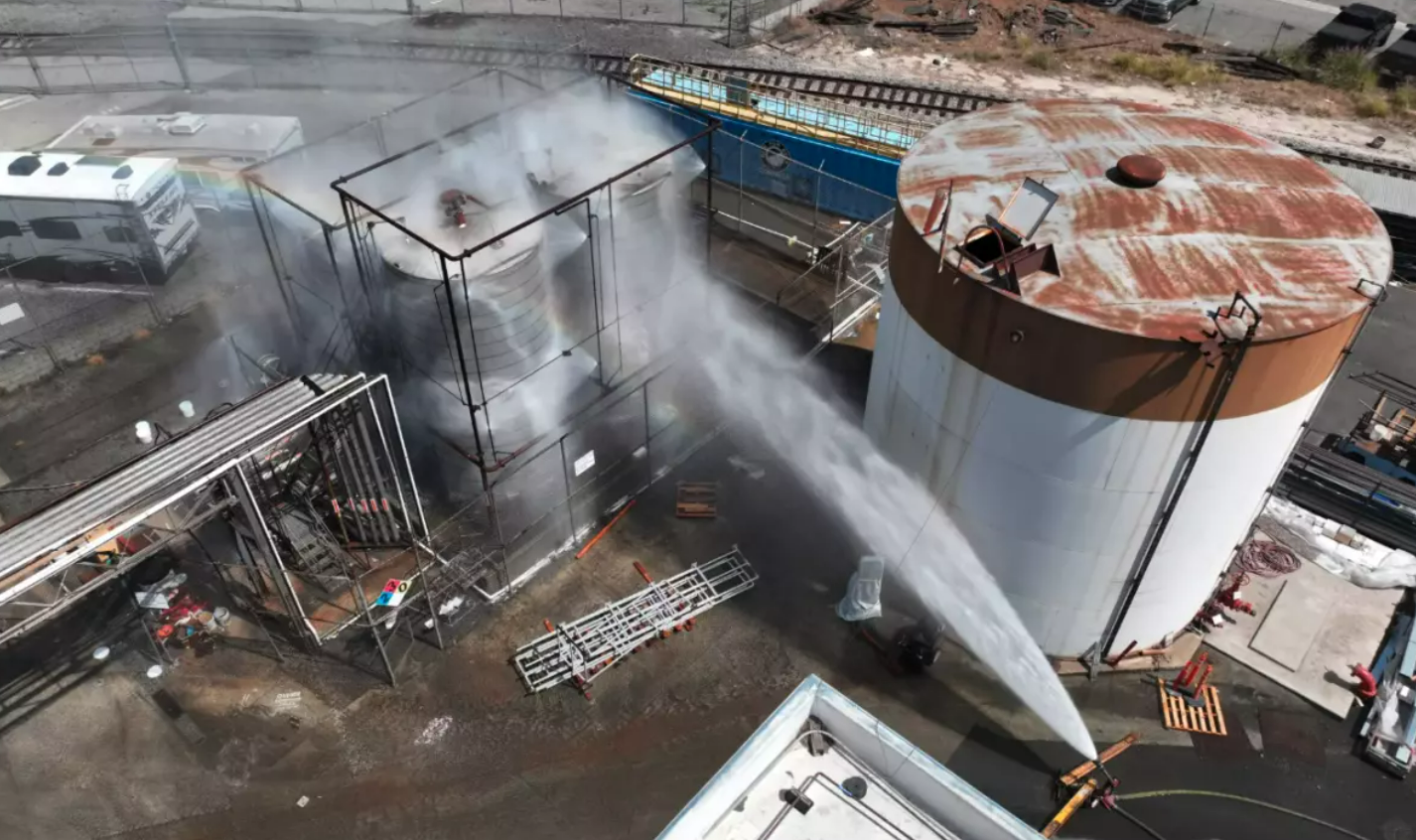
USA – California Chemical Emergency Forces Mass Evacuations as Officials Work to Prevent Explosion
Thousands of residents in Orange County, California, were placed under evacuation orders after emergency teams worked to stabilize a dangerous chemical incident at an aerospace manufacturing facility in Garden Grove.
Authorities estimated that roughly 50,000 people were displaced due to fears that a large industrial tank containing methyl methacrylate — a highly flammable industrial chemical used in plastics production — could either rupture or explode. Officials described the situation as unprecedented and warned that the incident remained unstable during response operations.
Growing Safety Concerns
The main concern centered on an overheated and pressurized tank that officials said had become structurally compromised. Emergency crews feared two possible outcomes: the tank could fail and release thousands of gallons of toxic chemicals, or it could trigger a powerful explosion capable of igniting nearby materials.
Orange County Fire Authority Division Chief Craig Covey described the emergency as one of the most serious situations he had encountered during his career, emphasizing that the threat was immediate rather than precautionary. Officials stated that approximately 7,000 gallons of hazardous material remained inside the tank at the height of the crisis.
By Sunday, May 24, officials reported what appeared to be a potentially positive development. During an overnight inspection mission, emergency responders identified a possible crack in the tank. Authorities believed the opening may have relieved some internal pressure, although teams continued monitoring the structure and surrounding air quality to confirm there were no leaks.
Interim Fire Chief TJ McGovern stated that additional inspections had been planned to verify the findings. Officials indicated that if conditions improved, evacuation zones could potentially be reduced.
On Saturday, May 23, California Governor Gavin Newsom declared a state of emergency in response to the incident, stating that public safety remained the state’s highest priority. He later requested federal emergency assistance to support local response efforts.
Emergency Response Efforts
Firefighters and hazardous materials teams worked continuously to reduce the risk of a disaster. Crews attempted to cool the affected tank with water, although officials reported that temperatures had increased from roughly 77 to 90 degrees despite mitigation efforts.
Authorities also prepared for the possibility of a chemical spill. Emergency planners discussed methods to contain and redirect leaked substances in order to prevent contamination of nearby neighborhoods and environmental damage, particularly to coastal areas.
At the time, monitoring stations reportedly detected no abnormal pollutant levels, and officials said communities outside the evacuation zone remained safe for normal daily activity.
How the Incident Unfolded
The emergency began on Thursday, May 21, after firefighters responded to reports of vapor escaping from a 34,000-gallon chemical tank at the GKN Aerospace manufacturing facility in Garden Grove.
Initial evacuation orders were issued but later lifted when conditions temporarily appeared to improve. However, by Friday, May 22, authorities determined that the tank remained unstable and could not be safely secured, leading officials to reissue and expand evacuations.
Emergency briefings indicated that three tanks at the facility had been affected. Tank #1 caused the greatest concern because a malfunctioning valve had reportedly seized due to an internal chemical reaction. Responders added neutralizing agents to another tank containing the same substance to reduce the likelihood of a broader chain reaction, while a third tank reportedly remained structurally stable.
Health Risks of Methyl Methacrylate
Health officials stated that methyl methacrylate primarily affected the respiratory system and could cause irritation to the skin, eyes, and throat. Short-term exposure was associated with breathing difficulties, nausea, headaches, and irritation of the nose and eyes.
Authorities warned that if an explosion had occurred, the chemical may have spread through the air as vapor and created serious respiratory hazards for nearby residents.
Despite the seriousness of the incident, no injuries were reported during response efforts. Emergency teams continued monitoring conditions around the site while officials worked toward a safe resolution and assessed when displaced residents could safely return home.
Photo credit: Allen J. Schaben/Los Angeles Times. All rights reserved.